


Vehicle Sales Software
Complete management of the sales process, pricing, proforma/invoicing, customer management (CRM), order-stage tracking, and analytical reporting.
View

SidarSoft’s comprehensive automotive software manages everything from production and parts supply to sales, inventory management, and after-sales services within a smart and unified system.
All automotive software needs in one integrated package
Complete management of the sales process, pricing, proforma/invoicing, customer management (CRM), order-stage tracking, and analytical reporting.
Service intake registration, repair management, consumed spare parts, warranty contracts, service history, dealer SLA, and customer satisfaction tracking.
BOM management, production planning, quality control, serial/chassis tracking, parts procurement, inventory and material flow, with precise management reports.
Modern, responsive, SEO-driven websites for product introduction, vehicle catalogs, model comparison, lead capture forms, and CRM integration.
Each module is web-based, scalable, and designed around the real operational processes of automotive organizations.
End-to-end vehicle sales management, from leads and pre-contracts to contracts, allocation, cardex, delivery, and management reports.
From vehicle reception to release, including online reception, inventory, warranty, technical engineering, repairs, and satisfaction follow-up.
Lead management workspace, happy calls, follow-ups, interaction history, customer segmentation, and precise customer journey control.
Remove paper and digitize organizational processes, correspondence, form workflows, referrals, approvals, and team workspaces.
Organizational chat, tickets, correspondence, internal announcements, and request tracking for faster communication between teams.
A dedicated customer portal for submitting requests, tracking orders and services, viewing vehicle status, notifications, and direct communication.
A fast, responsive official website for brand presentation, products, dealers, lead forms, and connection to organizational systems.
Online vehicle or parts sales with catalog, cart, order registration, inventory management, pricing, and sales-system connection.
The infrastructure, support, and delivery model of all modules are designed for serious organizational use.
Ideal for organizations that want to launch sales, services, customer relations, automation, customer app, website, and online store in one integrated package.
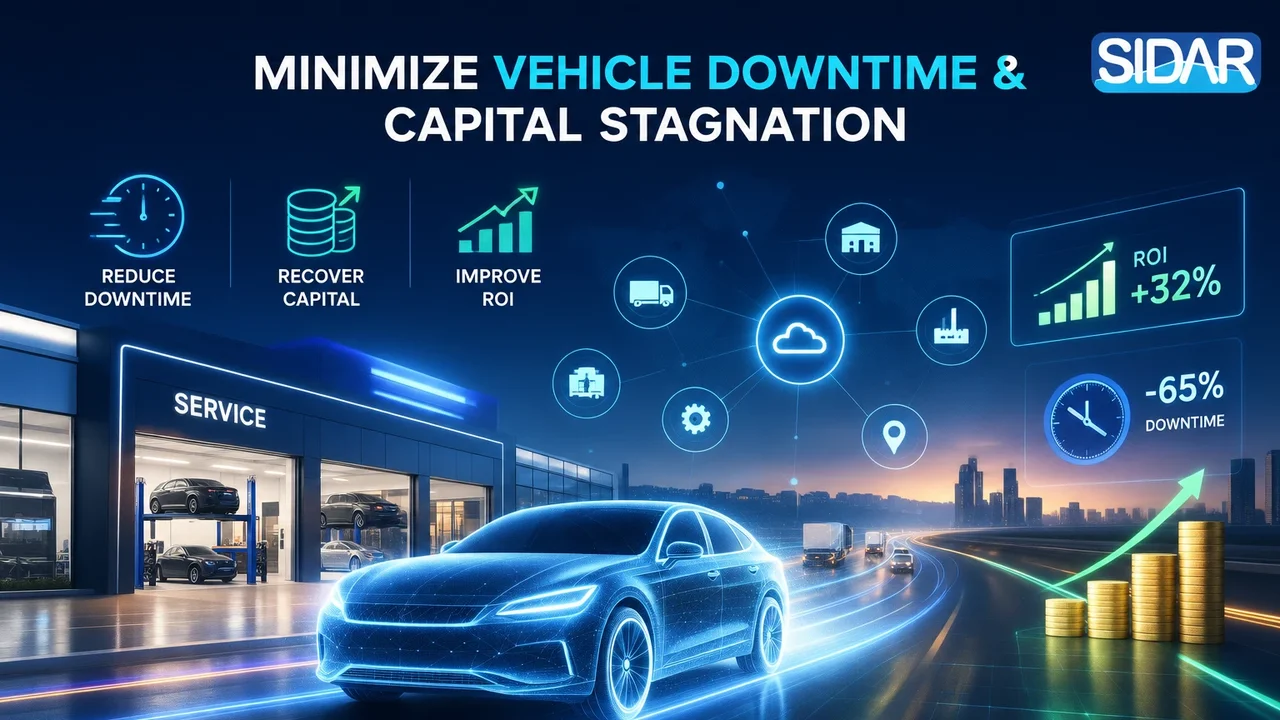
Streamline dealership workflows, eliminate warranty downtime penalties, and automate critical VOR spare parts allocation with SidarSoft Automotive ERP.
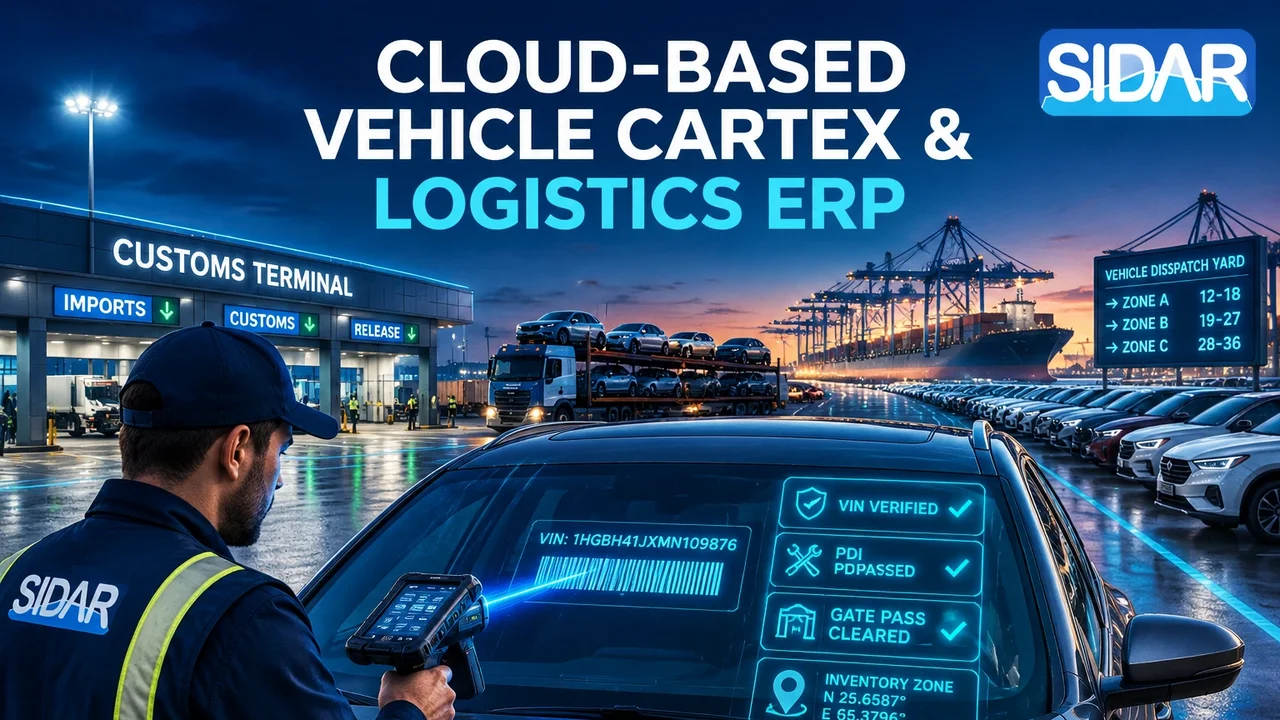
Revolutionize your automotive supply chain with Sidar’s cloud-based Cartex engine. Achieve real-time VIN tracking, smart vehicle allocation, and automated financial gatekeeping to eliminate delivery errors.
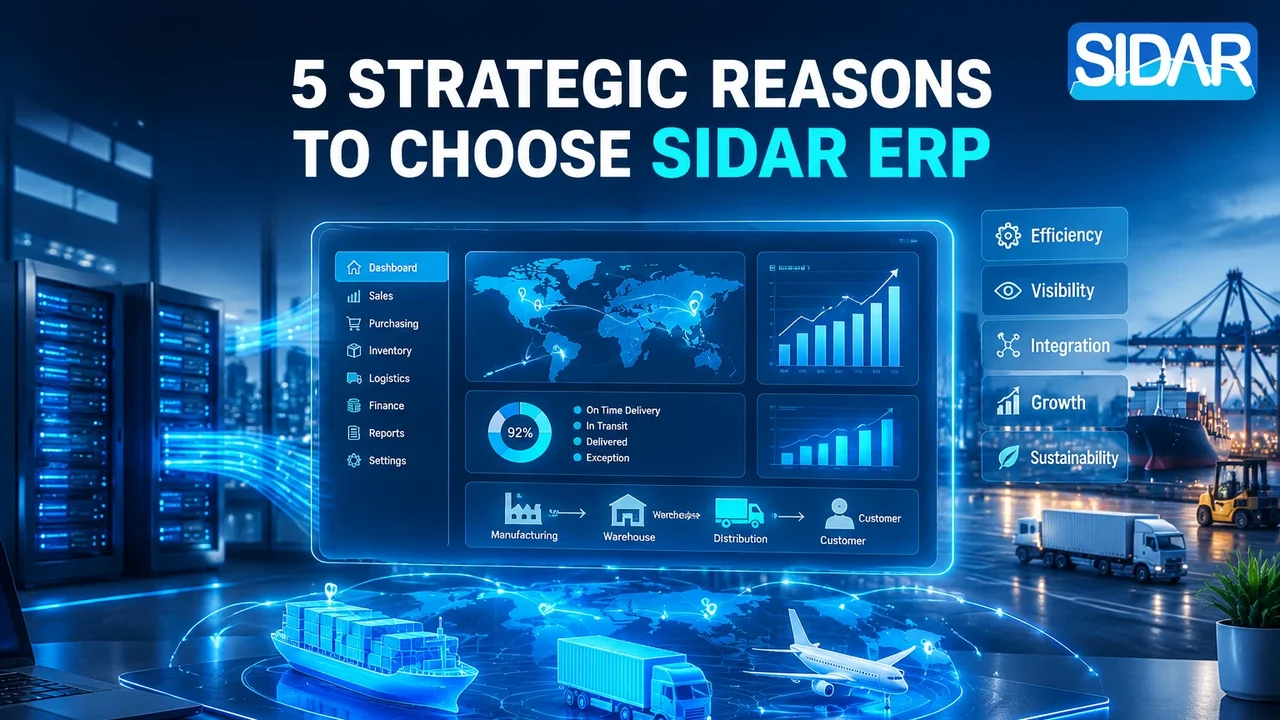
Are you struggling to manage complex business operations? Discover 5 key reasons to choose Sidar ERP—from deep customization and 24/7 support to comprehensive automotive & supply chain management. Invest in your business growth today.
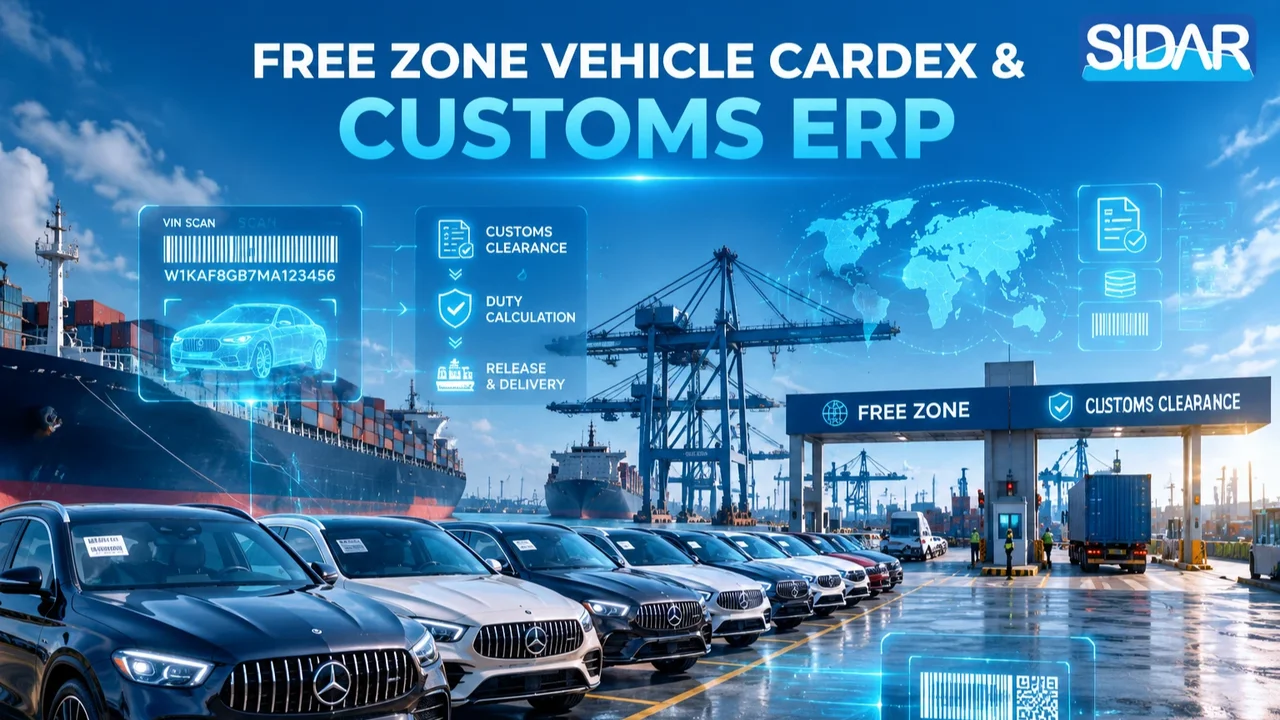
Optimize your Free Zone automotive operations with SidarSoft ERP. Seamlessly integrate Vehicle Cardex with customs clearance, landed cost calculations, and VIN tracking to eliminate manual errors.
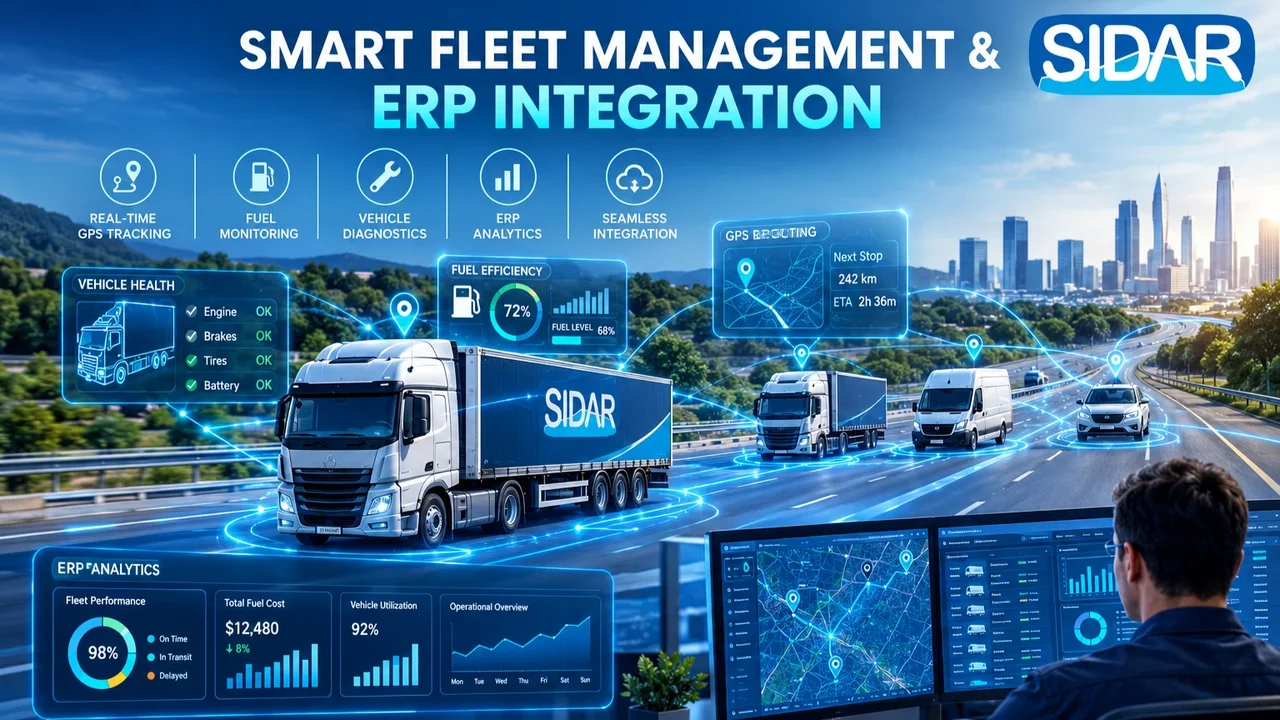
Discover how fleet management and ERP integration can connect vehicle operations with maintenance, inventory, and cost control.

Master automotive cost calculation and landed costs amid currency shifts. Optimize your supply chain with Sidar Soft ERP for accurate pricing and profitability.
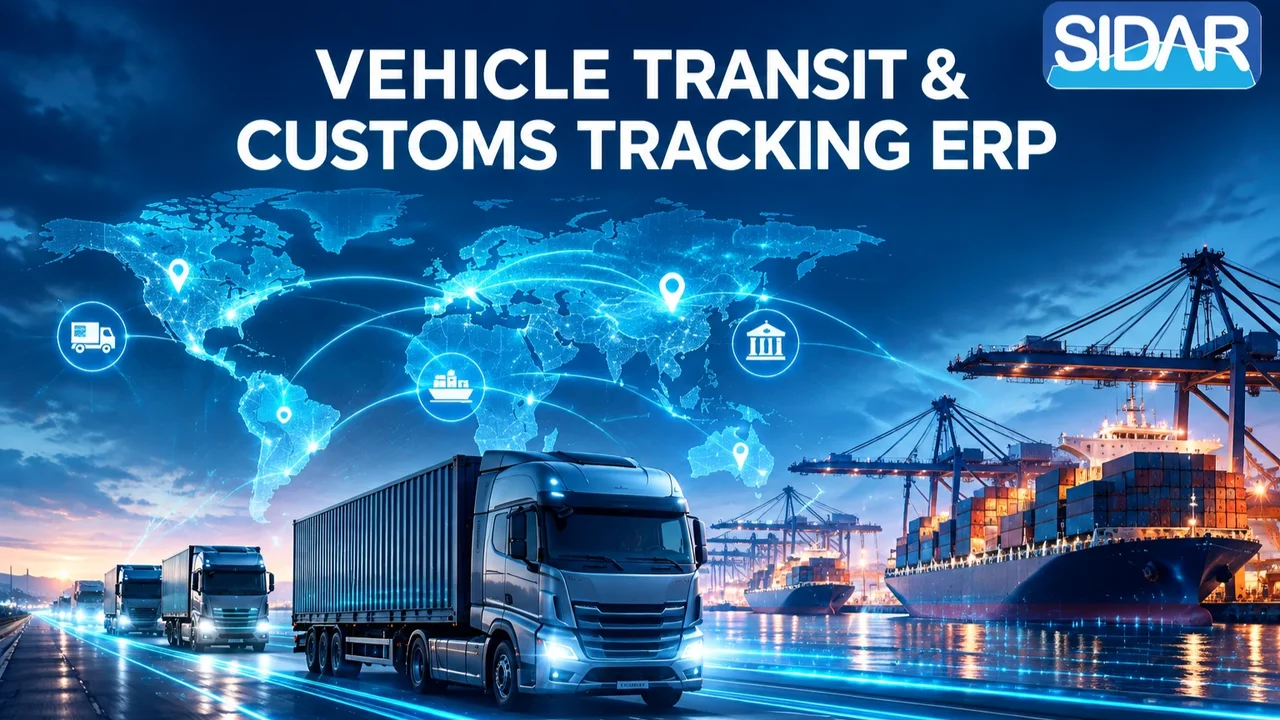
Streamline vehicle logistics from ports and customs yards to dealership networks with SidarSoft Automotive ERP: Granular VIN tracking, mobile inspection checklists, landed cost calculation, and transit risk control.
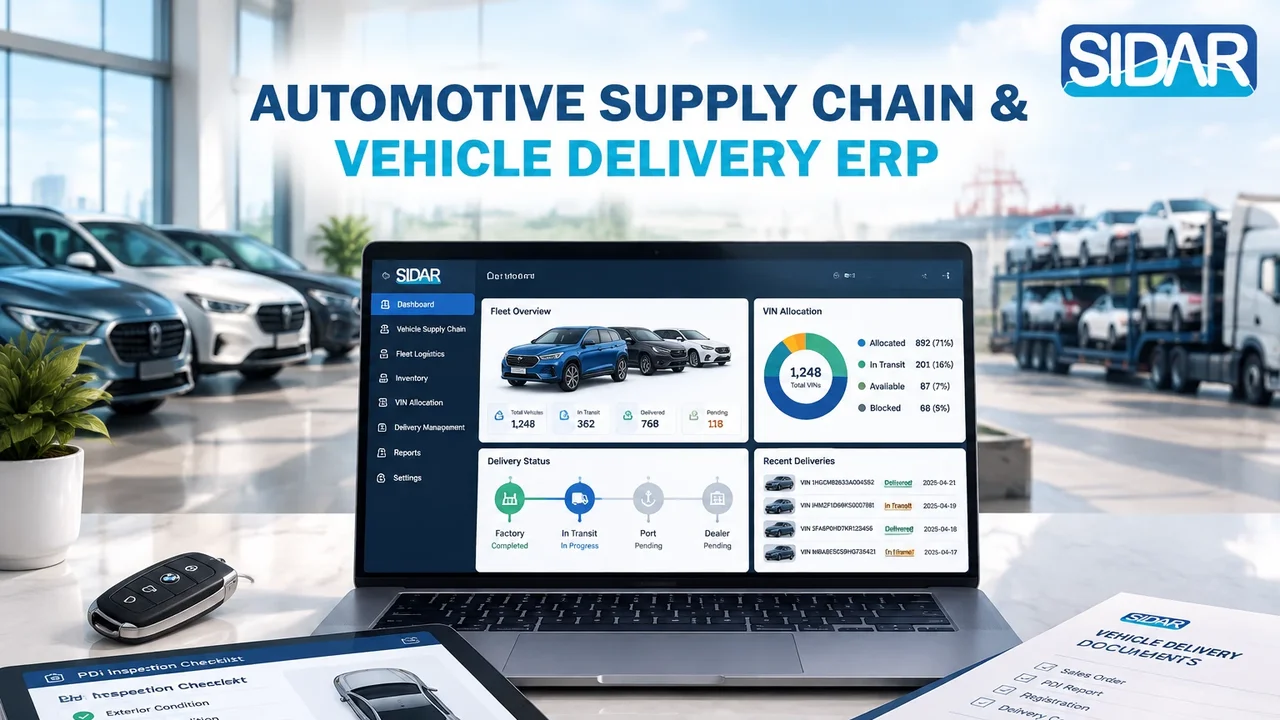
Streamline vehicle supply chain, track VINs, and automate customer delivery with SidarSoft ERP.
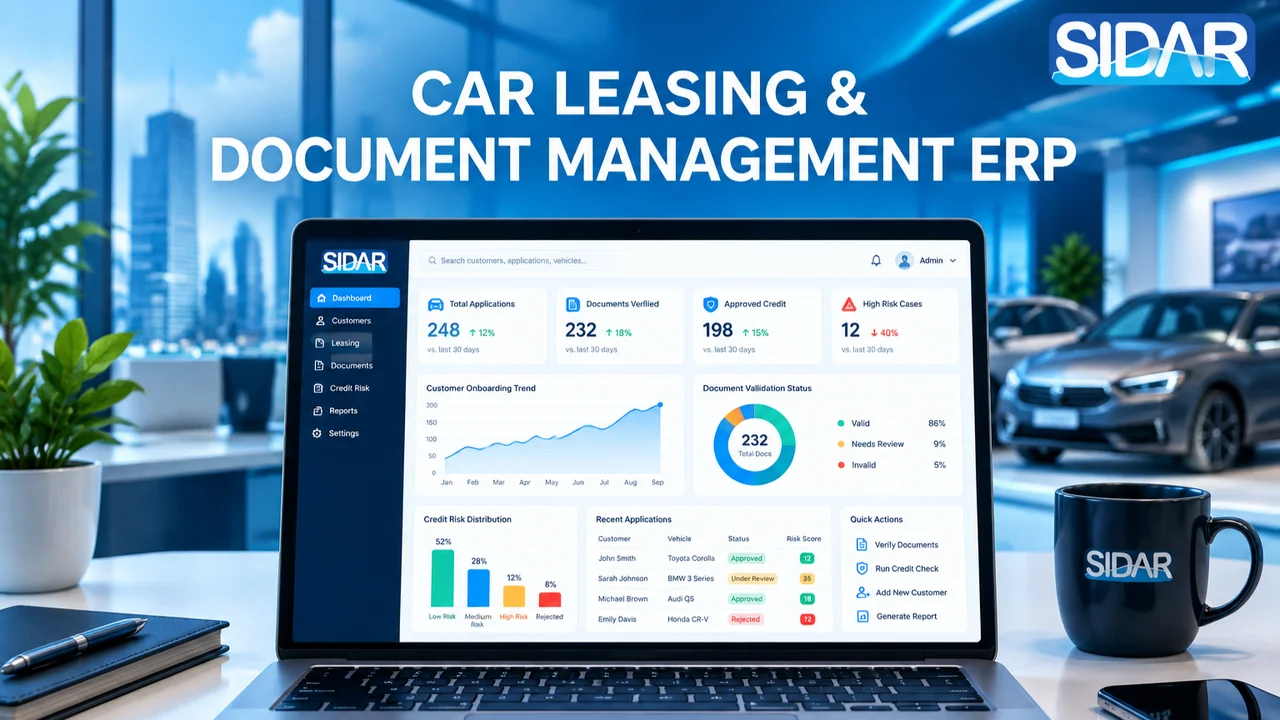
Struggling with leasing documentation? Learn how SidarSoft ERP automates document verification, mitigates financial risk, and accelerates customer onboarding.
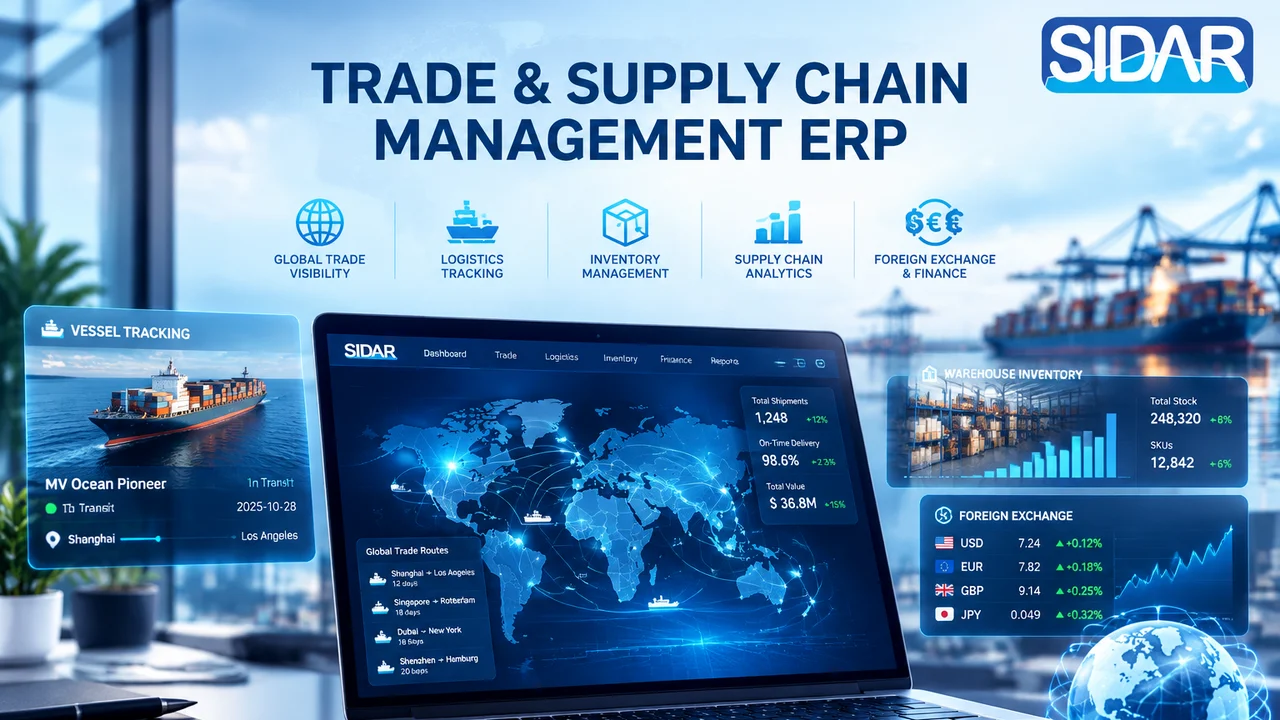
Optimize your domestic and foreign trade with Sidar ERP. Streamline your supply chain, automate procurement, and master import costs with an integrated platform
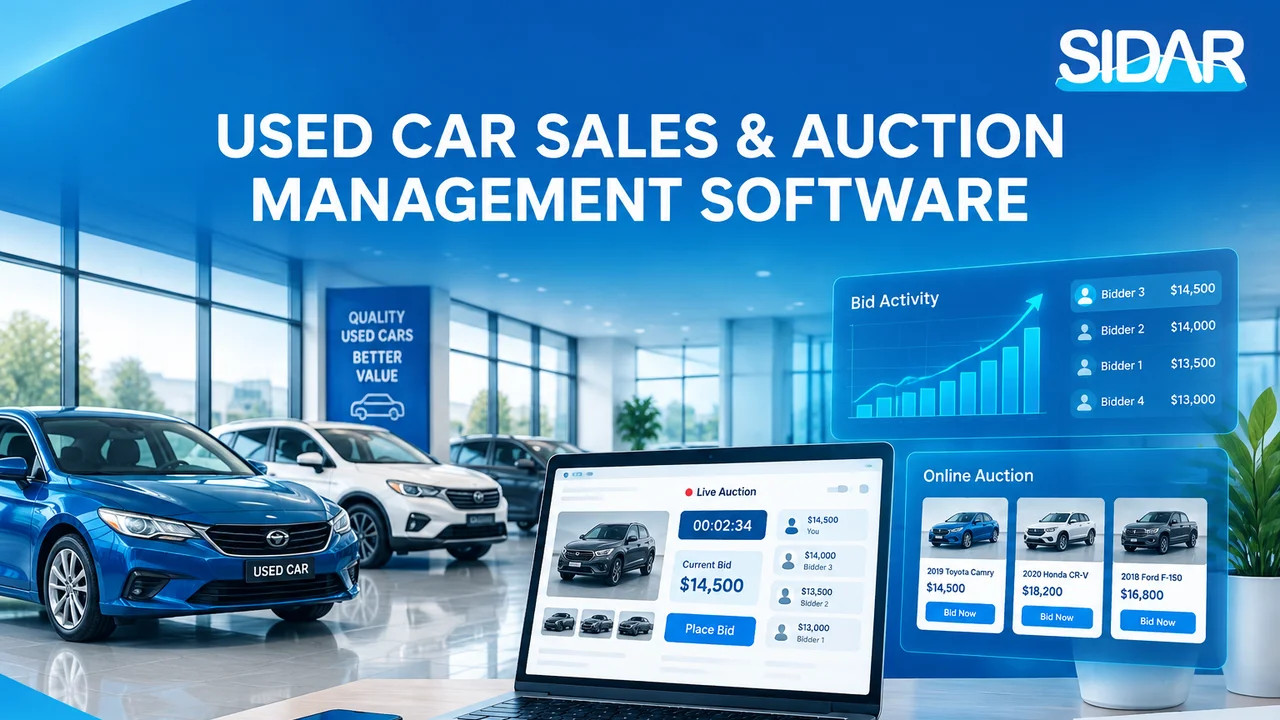
SidarSoft ERP: Comprehensive management for used car sales & online auctions. Boost transparency and profitability for dealerships & fleets.
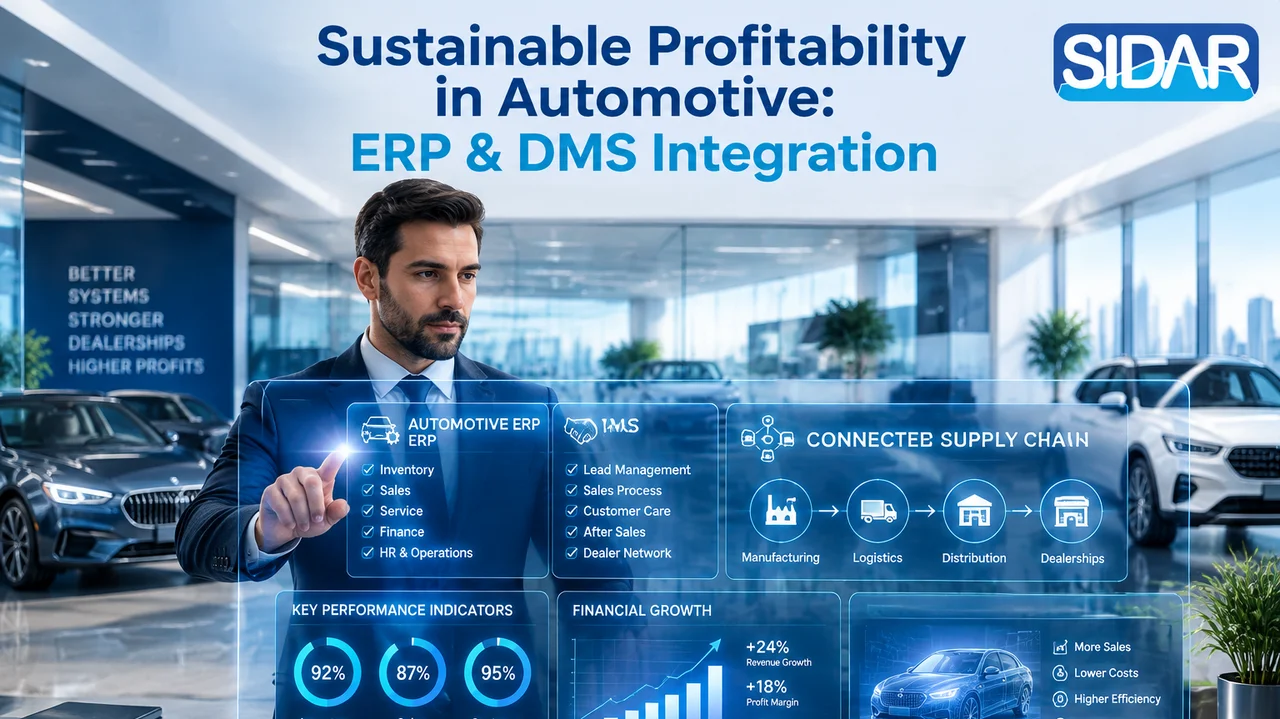
How to turn scattered data into profitability? Discover the strategic power of Sidar’s ERP and DMS integration for automotive leaders to eliminate hidden operational costs.
We build a comprehensive smart solution for you so you can digitize all organizational processes and get rid of paper and Excel.

Tired of slow approvals and complex purchasing processes?
Our Business Process Management System (BPMS) helps organizations run approvals faster, optimize purchasing workflows, and enable smoother collaboration across departments.

Newly established automotive companies often face many challenges at the start — from building a professional website to launching an integrated sales and after-sales platform. SidarSoft has designed a complete, dedicated package: product showcase website, customer web application, integrated sales system, and after-sales service system. Leave everything to SidarSoft.
Get a free consultation and discover how the right software can transform your operations.






 Software Feature Introduction Videos on Instagram
To watch short and practical videos introducing our software features, real project demos, and specialized solutions for the automotive industry, follow SidarSoft on Instagram.
View on InstagramClear answers to the questions automotive companies ask before choosing an ERP, vehicle sales and after-sales software, CRM, or customer platform.
It is an integrated solution for digitizing automotive business processes, bringing sales, after-sales service, customer relations, training, and enterprise management together on one coordinated platform. Information flows consistently between departments, giving managers access to more accurate reports.
The solution can cover sales and contracts, CRM and customer affairs, after-sales service and warranty, inventory and spare parts, procurement, finance, human resources, training, workflows, and management dashboards. The final module set is selected according to each organization’s structure and requirements. Explore the enterprise ERP software in more detail.
Automakers, vehicle importers, production and assembly companies, dealer networks, sales and leasing companies, and after-sales service providers can use this solution. Its modular architecture allows each company to start with the modules it needs and expand the platform over time.
The system can manage the complete journey from leads and customer records to pricing, quotations, contracts, payments, vehicle allocation, delivery, and sales reporting. This integration makes every customer and order easy to track without fragmented data. Learn more about the vehicle sales software features.
Service appointments and intake, vehicle records, repairs and consumed parts, warranty management, service history, dealer performance, and customer satisfaction are among its core processes. The automotive after-sales solution is designed to create a consistent service experience across the network.
By keeping calls, requests, complaints, follow-ups, surveys, and interaction history in one place, sales and service teams gain a complete view of every customer. This enables faster responses, measurable follow-up, and better decisions that improve customer satisfaction and loyalty.
Yes. The training system can be used to define courses, manage learning content, record attendance and assessments, track learning paths, and report on employee or dealer-network training alongside other enterprise processes.
Yes. SidarSoft designs official responsive corporate websites, product catalogs, lead-generation forms, and customer web applications. These platforms can connect to sales, CRM, and after-sales systems so customers can submit and track orders, requests, and appointments online. Explore our automotive website design and customer web application services.
After analyzing the organization’s processes, modules and workflows can be configured or developed around its requirements. Migrating existing data and integrating with current systems can also be assessed based on the organization’s technical infrastructure and available access.