


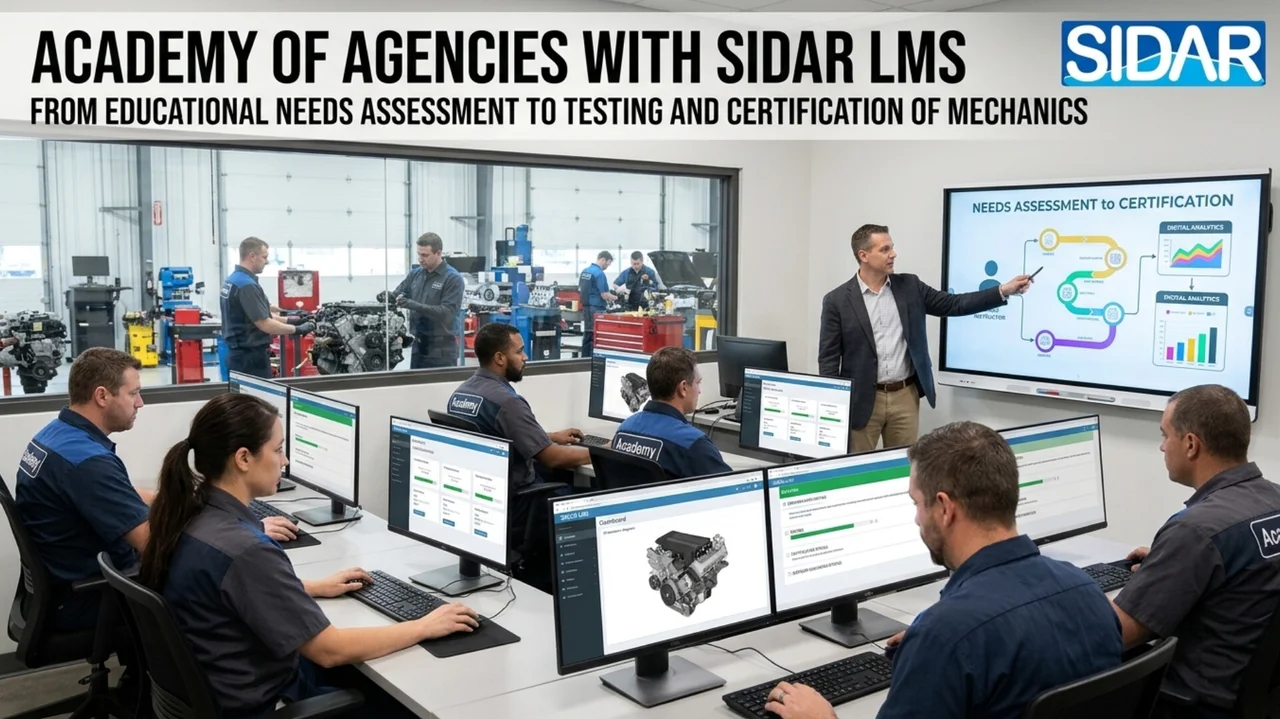
Summary: The biggest difference between successful dealerships and others is consistent technical knowledge. Scattered handouts and ad-hoc classes cannot be tracked and do not reduce comebacks. This guide shows how Sidar LMS manages everything in one HR-connected system: from job-based needs analysis and performance evaluation to course definition, online and offline training, testing, certification and individual learning records.
Why a Dealership Network Needs a Unified Academy
In a holding with several branches and dozens of technicians, knowledge is uneven. One technician passed warranty training, another did not. One receptionist knows quality standards, another works by habit. The result is more comebacks, lower evaluation scores, dissatisfied customers and disputes over warranty claims.
The solution is not more classes, but a central academy that defines who passed which course at which level and who is authorized to do what.
The Hidden Cost of No Training in the Workshop
- Comebacks: incomplete diagnosis and repeat visits for the same fault
- Rejected warranty claims: incomplete documentation and checklist mismatch
- Lower satisfaction: longer vehicle downtime and unclear customer explanation
- Dependence on masters: when one expert leaves, all knowledge leaves
Step 1: Needs Analysis by Job and Performance
- Job description: mandatory courses for each role such as electrician, receptionist and workshop supervisor.
- Performance evaluation: high comeback rate or low happy-call score triggers remedial courses.
- New requirements: new product, technical bulletin or quality standard change creates automatic training needs.
Step 2: Course, Calendar and Instructor Definition
| Course Level | Example | Audience |
|---|---|---|
| General orientation | Reception to release process and quality standards | All dealership staff |
| Technical specialist | Electrical, gearbox and fuel diagnostics | Technicians and supervisors |
| Warranty and claims | Correct warranty and hot-parts recording | Warranty and reception experts |
| Customer care | Happy call, complaint handling, delivery | Sales and reception staff |
Step 3: Online, Offline and Video Content
- Online training: videos, technical documents, parts catalogs and workshop instructions uploaded centrally, accessible to remote branches without travel.
- Hands-on classes: for practical skills such as diagnostic tools and sensitive repairs, with attendance recorded.
- Single version: all branches access the latest content and old handouts are retired.
Step 4: Online Testing and Certification
Training without testing is only attendance. Sidar Training runs an online exam after each course with a clear pass mark. For example, a technician must pass to be authorized for warranty vehicles. After passing, the certificate is issued and stored in the personal file as the basis for technical authorization.
Step 5: Learning Record Connected to HR
- Promotion, transfer, rewards and contract renewal based on real training history
- Finding staff without valid certificates before quality audits
- Succession planning for key staff leave or exit
- Self-view of records through the employee self-service portal
Effectiveness Measurement and Management Dashboard
Managers should ask: after training, how much did comebacks fall, how much did evaluation scores rise, and how much did reception-to-release time improve. LMS reports answer with numbers: comeback comparison before and after, training hours per branch and person, and certificate expiry alerts.
Implementation Steps in Your Group
- Define job descriptions and mandatory courses per role
- Upload existing content and produce short videos
- Define exams, pass marks and certificate templates
- Pilot in one dealership and fix process gaps
- Roll out network-wide with an annual calendar
Conclusion
A dealership academy is not a cost but a profit infrastructure. When needs, training, testing, certification and records live in one LMS connected to HR, knowledge moves from individual memory to organizational assets. The result is fewer comebacks, higher warranty-claim acceptance, better evaluation scores and stronger customer trust.
Do you want to build your holding academy on Sidar LMS?
Book a specialized Training and HR demo.


