


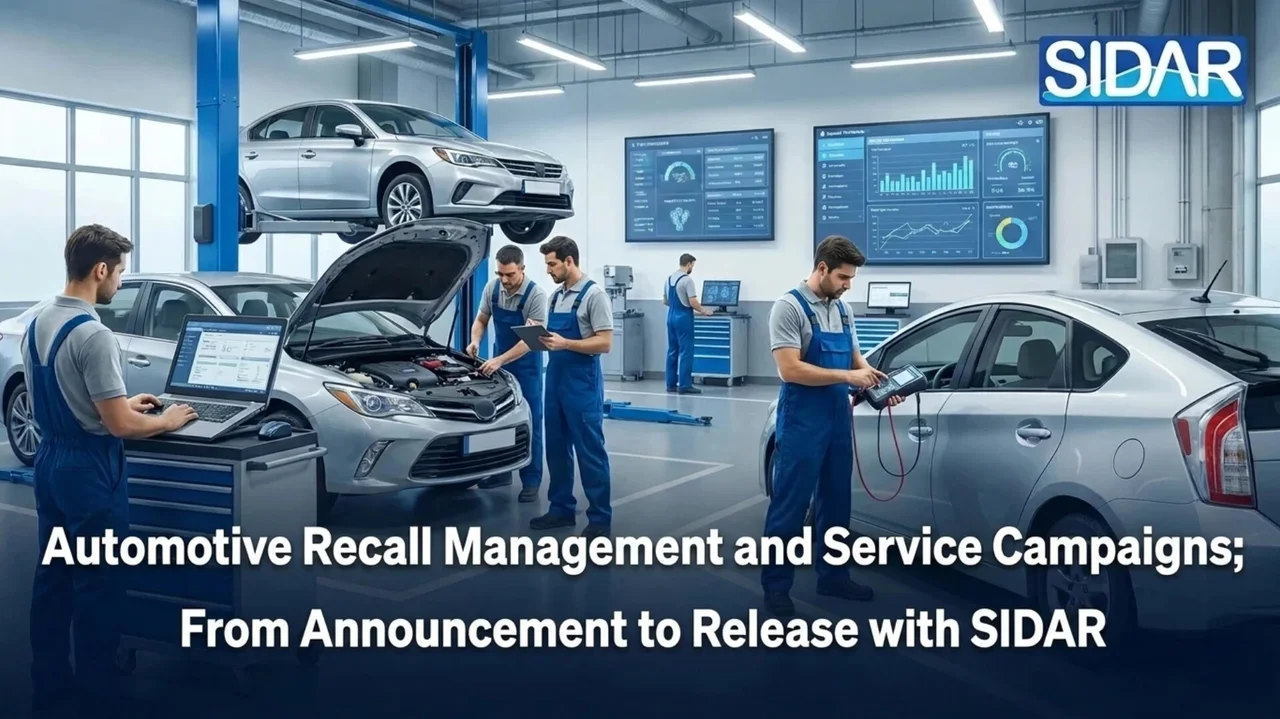
Summary: A recall is the toughest test of an aftersales network. A safety or technical fault fixed late or incompletely turns into brand damage, evaluation penalties and dissatisfaction. This guide shows how Sidar Aftersales and Warranty solution manages a campaign from OEM announcement to last vehicle release, without spreadsheets and scattered calls.
Safety Recall vs Service Campaign vs Technical Bulletin
| Type | Example | Cost to Customer | Priority |
|---|---|---|---|
| Safety Recall | Brake, airbag, steering, fuel fault | Fully free | Urgent and mandatory |
| Service Campaign | Software update, preventive part change | Free in campaign period | Urgent but scheduled |
| TSB | Fix at next workshop visit | Depends on warranty | At first reception |
Why Manual Recall Management Fails
- Missed vehicles: incomplete VIN detection and second-owner sales
- Incomplete notification: single SMS without call follow-up
- Parts shortage: late hot-parts ordering and workshop dwell
- Reception crowding: walk-ins without appointments
- Claim disputes: mismatch with bulletin and cost rejection
Step 1: Campaign Registration and Automatic VIN Detection
The start in Sidar is the cloud vehicle kardex. The campaign is registered with code, technical description, VIN range, model, model year, parts and approved labor. The system auto-extracts affected vehicles from sold and delivered units, even second owners traceable via service and plate history.
Step 2: Targeted Notification and No-Show Follow-up
- Official SMS with campaign code and dealership contact
- Contact-center call logging per VIN with outcome
- Automatic reminders for no-shows and follow-up list
- Home-service registration for immobilized or special customers
Step 3: Smart Scheduling and VOR / VIS Management
Recall vehicles skip the normal queue. In Sidar Aftersales they are flagged priority. VOR immobilized vehicles needing rescue and VIS vehicles stopped in workshop get hot-parts and free capacity first. Booking follows real capacity per lifts and certified technicians.
Step 4: Hot-Parts Supply and Stock Reservation
When VINs are known, parts need is known. The system suggests orders from affected counts, central and dealer stock and lead time. Recall hot parts are reserved and not consumed for normal service, so vehicles do not dwell waiting for parts.
Step 5: Reception to Release and Accurate Warranty Settlement
At reception, VIN scan warns which open campaign applies and what operation is required. The job order carries the campaign code, parts and labor at approved rates with final QC. Because documents match the bulletin, the warranty claim is sent without mismatch and settled. After release, happy-call and satisfaction are logged before quality evaluation.
Management Dashboard the Holding Sees
- Coverage: completed, booked, informed, under follow-up
- Each dealership performance in attraction and completion
- Recall parts stock and shortage per warehouse
- Average reception-to-release time for campaign vehicles
- Sent, accepted and returned claims status
- Recall customer satisfaction in happy calls
Conclusion
A successful recall means no missed VIN, no uninformed customer and no returned claim. When VIN detection, notification, scheduling, parts supply, reception and settlement connect in one ERP, recall turns from reputation crisis to trust opportunity. Sidar builds exactly this connection.
Do you have an active campaign with incomplete coverage?
See a demo of Sidar Aftersales, Warranty and Vehicle Kardex.


