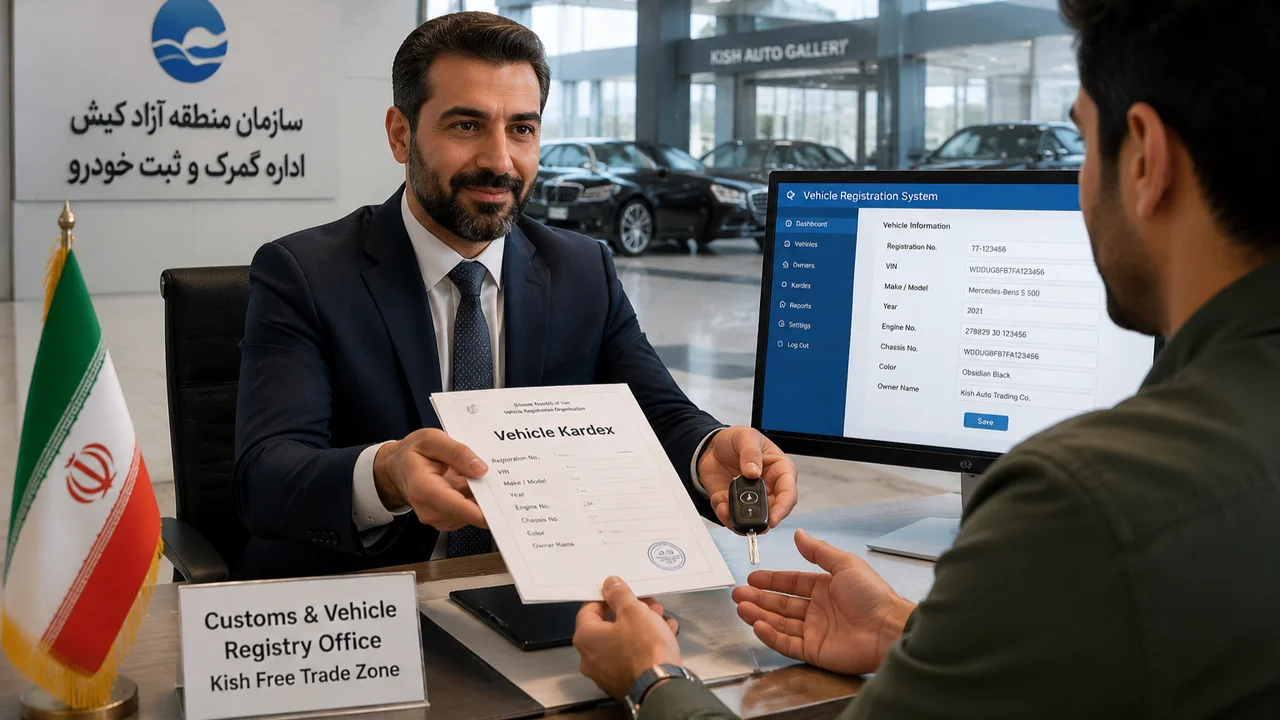
Software for Issuing Car "Kardex" in Free Zones; A Smart Solution for Document and Vehicle Data Management
Managing vehicles in Free Trade and Industrial Zones, due to differences in import regulations, transit, ownership, customs, sales, and after-sales services, requires a precise and organized process. Car importing companies, showrooms, relevant government organizations, automotive service providers, and groups involved in selling or maintaining vehicles in Free Zones face a large volume of information and documents.
One of the most important documents used in this process is the "Kardex" (Vehicle Data Card). Correctly registering vehicle specifications, owner details, transfer history, permit status, and other related information plays a vital role in accelerating administrative affairs and reducing human error. For this reason, using a software for issuing Car Kardex in Free Zones can significantly improve the processes of registration, control, issuance, archiving, and tracking of vehicle information.
A specialized Kardex management system is not just a tool for printing a document; it must be capable of managing vehicle information from the time of initial entry or registration through stages of sales, transfer, transit, services, change of ownership, and archiving records. This gives organizations and companies operating in Free Zones a more accurate view of the status of every vehicle.
What is a Vehicle Kardex and Why is it Necessary?
A vehicle Kardex can be considered as a document or data file for recording the main specifications of the vehicle and its associated history. This information may include vehicle technical specifications, chassis number, engine number, brand, model, color, manufacturing year, country of origin, importer details, ownership status, and administrative records.
In Free Zones, the Kardex can be used in processes such as vehicle identification, record control, sales management, service delivery, checking owner information, and tracking vehicle status. Therefore, the issuance of a Kardex must be done with high precision, and any changes in information must be recordable and trackable.
In traditional methods, Kardex information might be recorded in paper forms, scattered files, or separate software programs. While these methods seem simple initially, as the number of vehicles and operational volume increases, the probability of errors, loss of documents, duplicate information, and difficulty in reporting rises.
Why Do Free Zones Need Specialized Software for Car Kardex?
Managing vehicles in Free Zones differs from managing vehicles in ordinary markets. The difference in document types, the need for strict control over technical and ownership specifications, and the importance of vehicle history make manual registration of information a significant risk for the organization.
Using a Kardex management software can store all information in a centralized database. In this scenario, authorized users can view vehicle records by searching for the chassis number, engine number, Kardex number, or owner information, preventing duplicate or incorrect data entry.
The software for issuing Car Kardex in Free Zones must align with real business processes. It should not be just a digital form for printing; it must be capable of managing the workflow of issuance, review, approval, correction, cancellation, renewal, or re-issuance.
Key Challenges of Traditional Kardex Issuance Methods
1. Potential for Data Entry Errors
Manual entry of information like chassis or engine numbers can lead to typos, causing discrepancies in documents and difficulties in identifying the vehicle later.
2. Scattered Information and Documents
When information is kept in scattered files or paper folders, accessing records becomes difficult, and the likelihood of incomplete files increases.
3. Difficulty in Tracking Changes
In traditional methods, it is usually unclear who, when, and why information was changed. Registering history in the software simplifies oversight.
4. Slow Process of Issuance and Correction
Manual preparation, review, entry, and filing are time-consuming. Any error during printing may require repeating the whole process.
5. Lack of Accurate Management Reports
It is difficult to extract accurate reports on sales performance or the status of issued/cancelled Kardexes from manual files.
Key Capabilities of SidarSoft's Car Kardex Issuance Software
Registering Complete Vehicle Specifications
The software allows for recording full technical specifications and vehicle identity, such as brand, model, chassis/engine number, origin country, etc., in an integrated electronic file.
Creating an Electronic File for Each Vehicle
An independent and trackable file is created for each vehicle, containing scanned documents, owner info, sales history, and change logs.
Issuing and Printing Kardex with Standard Templates
The software generates Kardex based on pre-defined templates, ensuring consistent document appearance and reducing data insertion errors.
Rapid Search by Chassis and Vehicle Info
Users can find any vehicle quickly by chassis number, Kardex number, owner name, or model, reducing response time for clients.
Controlling Duplicate Data
The system identifies duplicate identification numbers (like chassis numbers) during registration, preventing multiple files for one vehicle.
Managing Kardex Status
Each Kardex can be tracked by status (Pending, Ready, Issued, Needs Correction, Cancelled), making process tracking transparent.
Review and Approval Workflow
The software supports a workflow for Kardex issuance approval by various officials, logging the timestamp of each stage.
Logging Activity History
Important user activities, such as file creation time or modification reasons, are logged to increase transparency and internal control.
Integration with Sales and Inventory Systems
In integrated automotive management systems, Kardex data is linked to sales, inventory, and accounting. This integration prevents redundant data entry and ensures accuracy across all departments.
Conclusion
The software for issuing Car Kardex in Free Zones is not just a printing tool; it is part of the information management infrastructure. This system helps companies in Free Zones transform their operations into fast, organized, and transparent digital processes.