


ISQI Requirements in 1405 for Automotive Companies
Explore the new 1405 ISQI requirements for automotive companies. Discover how SidarSoft’s solutions help you achieve compliance with INSO 23860, TA, and COP standards.
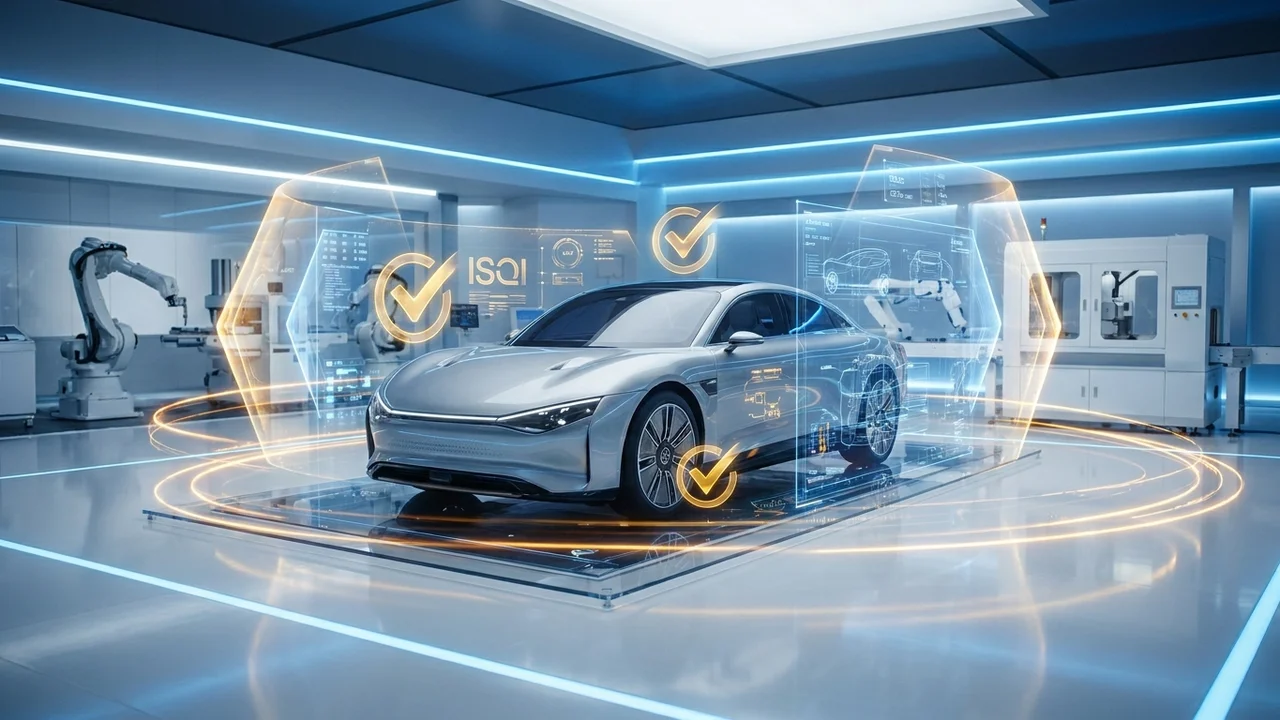
With the adoption and announcement of the comprehensive INSO 23860:1405 standard, along with the continued implementation of the “Type Approval (TA)” and “Conformity of Production (COP)” frameworks, the year 1405 can be regarded as one of the most significant turning points in the standardization structure of Iran’s automotive industry. Within this framework, automakers and importers are required to align all processes related to design, product development, testing, manufacturing, quality control, and supply chain management with the latest revisions of national standards and European references. These requirements are not limited to obtaining initial approval; they also extend to maintaining compliance throughout the product lifecycle and mass production, requiring a systematic and managerial approach across the entire organization.
The Role of ISQI in the Automotive Standards and Quality System
The Iran Standard and Quality Inspection Company (ISQI) serves as a specialized evaluation body in the automotive sector and plays a central role in assessing whether products comply with applicable standards. Working in coordination with the National Standards Organization of Iran, ISQI is responsible for reviewing technical documentation, evaluating test results, conducting field inspections, and supervising the implementation of TA and COP requirements.
From a management perspective, effective interaction with ISQI requires transparent, traceable, and data-driven systems. Every engineering decision, every change in product specifications, and every test result should have a documented and presentable record. Companies that still rely on traditional methods and scattered files are likely to face serious challenges under the new evaluation environment.
The INSO 23860:1405 Comprehensive Standard and Its Framework
The INSO 23860:1405 standard is a comprehensive multi-part standard developed for vehicles in categories M, N, and O, as well as related systems, components, and technical assemblies. This standard is based on the European reference EU 2021/535 and aims to align the national standard structure with current international requirements.
Key Features of the 1405 Standard
- Comprehensive coverage of active and passive vehicle safety requirements
- A clearly defined framework for assessing systems and independent technical units
- Alignment with European regulatory structures and ECE standards
- A unified basis for the type approval process of new products
- Clearer testing requirements and technical reporting procedures
Given the breadth of this standard, companies should develop a clear roadmap for gradual compliance across all of its sections. This includes reviewing product design, identifying compliance gaps, planning supplementary testing, and coordinating with approved laboratories.
Type Approval (TA) Requirements
Type Approval is the process through which a specific vehicle or related system sample is evaluated for compliance with technical and safety requirements. Without obtaining a Type Approval certificate, the product cannot be legally introduced to the market. Under the current framework, the scope of standards associated with TA is broad and includes dozens of technical regulations.
Essential Actions for Success in the TA Process
- Preparing and maintaining a complete Technical File for the product
- Conducting performance and safety tests at accredited centers
- Accurately documenting design specifications and engineering changes
- Establishing effective coordination between engineering, quality, and standards teams
- Continuously monitoring updates to reference standards and applying revisions
In practice, the main challenge for many companies is not the testing itself, but the systematic management of documents, revisions, and changes. Any inconsistency between documentation and the actual product may lead to delays in the approval process.
Conformity of Production (COP) Requirements
Conformity of Production ensures that mass-produced vehicles continue to retain the same characteristics and specifications as the approved sample. This framework includes both an initial production line assessment and periodic inspections. In this context, the primary focus is on the stability of production processes and the effectiveness of the quality control system.

Key COP Focus Areas in 1405
- Implementing continuous quality controls on production lines
- Calibrating and validating testing and measurement equipment
- Systematically recording production data and periodic test results
- Managing deviations and corrective/preventive actions
- Evaluating and monitoring supplier performance
Within the COP framework, any change in raw materials, part design, production process, or supplier must be reviewed and documented in terms of its impact on standard compliance. This significantly increases the importance of effective Change Management.
The Impact of 1405 Requirements on Automotive Management Structures
The new requirements are not merely technical obligations; they require a redefinition of how quality is managed throughout the organization. Senior managers must ensure that the organizational structure, software tools, and corporate culture all move in the direction of sustained compliance with standards.
- The need to integrate engineering, quality, and production information
- Greater transparency and traceability of technical decisions
- Reduced risk of production stoppages caused by standard nonconformities
- Improved brand credibility in domestic and export markets
- Higher readiness for periodic ISQI evaluations
Without integrated systems, managing this volume of requirements and documentation may lead to resource waste, rework, and increased legal and operational risks.
An Executive Solution for Sustainable Compliance with ISQI 1405 Requirements
The experience of leading companies shows that sustainable compliance with new standards is difficult to achieve without digital tools and integrated process management systems. Manual document handling and scattered files are no longer sufficient to address the complexity of the 1405 standard.
SidarSoft provides specialized software solutions in process management, quality management, and after-sales services for the automotive industry, creating the infrastructure required for systematic compliance with ISQI requirements. These systems enable centralized data management, document version control, test record registration, supplier performance monitoring, and structured reporting.
- Integrated management of documents and compliance requirements based on the latest revisions
- Support for TA and COP processes with full traceability of records
- Management dashboards for monitoring compliance status
- Reduced human error and prevention of documentation inconsistencies
- Faster preparation of reports required by ISQI
Implementing such a system gives managers confidence that all 1405 standard requirements are being handled in a structured and controllable way, and that the organization is fully prepared for both internal and external assessments.
For more information about the software, please click the button below



Frequently Asked Questions
What are the core pillars of the 1405 ISQI requirements?
The primary focus is on implementing the comprehensive INSO 23860:1405 standard and enforcing the “Type Approval (TA)” and “Conformity of Production (COP)” frameworks. These requirements cover all processes from design and manufacturing to testing and after-sales service to ensure higher standards of vehicle safety and quality.
How does SidarSoft’s software facilitate the Type Approval (TA) and Conformity of Production (COP) process?
SidarSoft provides a centralized platform for managing technical documentation and test records, digitizing the entire TA and COP workflow. With this system, companies gain instant access to technical files, test reports, and engineering change records, minimizing human error during the approval process.
How does SidarSoft assist automotive companies in managing technical documentation according to 1405 requirements?
Disorganized document management is a major challenge for the 1405 standard. SidarSoft organizes all technical files using an intelligent version control and classification system. This ensures that all necessary evidence for compliance is available at a moment’s notice during sudden or periodic audits.
What is the biggest challenge for automakers regarding the 1405 standards?
The biggest challenge is transitioning from traditional, manual documentation to digital, data-driven methods. Given the complexity and scope of the 1405 standards, manual management is no longer sufficient and can lead to costly non-conformities on production lines.
How does using the SidarSoft platform impact the outcome of periodic ISQI inspections?
SidarSoft significantly increases the chances of passing ISQI inspections by creating full process transparency and ensuring “Traceability” in production. Through management dashboards and online quality monitoring, the platform allows managers to identify and correct potential non-conformities before they escalate.