


What Is the Difference Between Bug Error and Software Development
Learn the difference between bug, error, and software development with simple examples and understand how each request is classified.
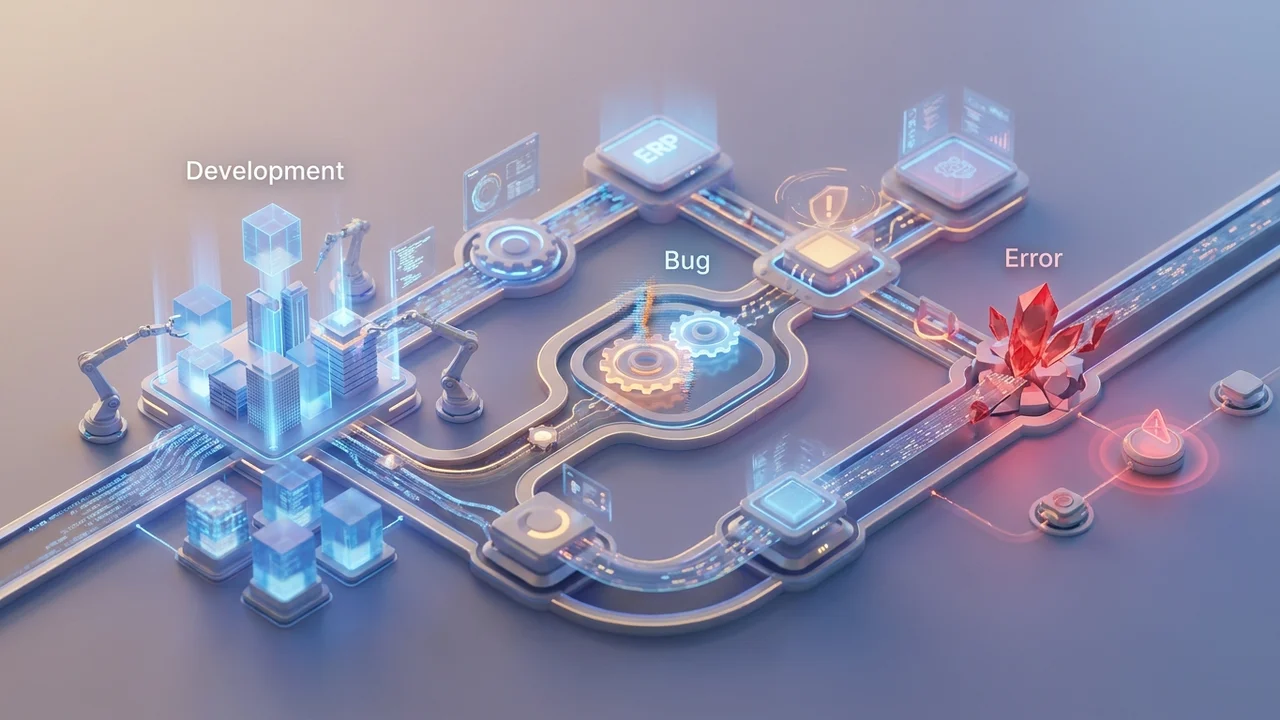
In many software projects, one of the most common challenges between clients and implementation teams is that terms such as bug, error, and development are often used as if they mean the same thing. At first glance, these concepts may seem similar, because in the end the user is facing a problem, a new requirement, or an unexpected system behavior. However, in practice, these three terms are very different from technical, operational, and even support perspectives. When these differences are not clearly understood, support processes become slower, client expectations become unclear, and misunderstandings may arise regarding responsibility, timing, and cost. That is why understanding the difference between bug, error, and development in software is important for any organization that relies on software systems in its daily operations.
Many clients assume that anything preventing the software from behaving as they expect must be a bug. But this is not always true. Sometimes the issue is caused by incorrect data entry, wrong settings, insufficient access permissions, or even a new business requirement. For example, a client may ask for a new report to be added to the system or request a new business process inside the software. In such a case, the matter is not a bug; it is a development request. On the other hand, if the software fails to work correctly under the right conditions and according to the original design, then it is considered a bug. Likewise, if the system cannot complete an operation because of incomplete data, a network interruption, or user mistakes, then we are dealing with an error. Understanding these differences helps clients describe their requests more accurately and helps support and development teams route and resolve issues faster and more transparently.
What Is a Bug in Software
A bug in software is a problem that causes the system to behave differently from what was intended in the analysis, design, or implementation. In simple terms, if the software is supposed to perform a certain task but does it incorrectly or does not do it at all, then there is a bug. A bug is usually related to coding, processing logic, integration between modules, or implementation defects. This means the root cause exists inside the software itself, not in a new request from the client.
To make this concept easier to understand, imagine using an ATM machine. You insert your card correctly, enter the correct password, and your account has sufficient balance, but the machine either fails to dispense cash or shows the wrong amount. In this case, the user has done nothing wrong, the process conditions are correct, but the result is still incorrect. This is exactly what a bug means in software.
There are many business examples of bugs as well. Imagine a user registers an invoice in a financial system, but the tax amount is calculated incorrectly. Or in a sales system, product inventory is not deducted from stock properly. Or in an HR system, an employee’s leave date is stored incorrectly. In all these situations, the user followed the right steps, but the software produced the wrong result. Therefore, the problem lies in the system logic or implementation.
What Is an Error in Software
An error in software usually happens when the system cannot complete an operation because of invalid input, an improper condition, an environmental issue, or an incorrect user action. In many cases, when users see messages such as access denied, invalid data, failed connection, or incomplete information, they assume the software has a bug. But this is not always the case. Sometimes the software is actually functioning correctly and is simply informing the user that the required conditions for completing the action are not available.
For example, imagine you are signing up in a system and you enter letters instead of a valid phone number. If the system shows a message saying the phone number is invalid, that is not a bug. On the contrary, it means the software is correctly validating the input. Similarly, if an operation fails because the internet connection is interrupted, this does not necessarily mean the software is defective. It is an error caused by external operating conditions.
Another practical example is when a user with view-only access tries to edit data and the system blocks the action. Or when an operator tries to register an invoice without selecting a customer first, and the software displays a warning requiring complete information. These are errors, not bugs, because the system is correctly enforcing its rules and preventing incomplete or unauthorized actions.
What Is Software Development
Software development means adding a new feature, changing an existing process, designing a new report, adding a new module, or improving the system structure to match new business needs. In other words, the requested capability did not exist in the current version of the software and is now being requested because business requirements have changed. Many requests that clients report as “problems” are in fact not bugs or errors at all; they are development requests.
For example, a company may already be using a workflow or process management system, but later decide that it needs a new approval flow for contracts. Or a manager may want a new dashboard to monitor branch performance. Or a client may ask for reports to be exported in a new format such as Excel or displayed as analytical charts. These requests do not mean the system is broken. They simply mean the business has grown or changed and the software now needs enhancement.
If we explain it with a simple analogy, imagine buying a car with a standard set of features. After some time, you decide you want to add a 360-degree camera, heated seats, or a larger screen. The absence of those features does not mean the car is defective. It simply means you want additional capabilities. In software, development has the same meaning. A development request is not a defect; it is a new requirement or an enhancement.
Why Understanding the Difference Matters
Understanding the difference between bugs, errors, and development requests makes communication between clients and software companies much clearer and more professional. When clients know what type of issue or request they are reporting, they can describe it more accurately and set more realistic expectations about response time and resolution. If the issue is a bug, it is generally expected that the technical team will investigate and fix it. If it is an error, the issue may be solved through guidance, training, corrected data, or adjusted settings. If it is a development request, it usually requires analysis, planning, time estimation, and sometimes separate cost approval.
From the support and development team’s perspective, correct classification is equally important. If all requests are submitted under one generic category, real bugs may get lost among enhancement requests, or important development needs may be mistakenly handled like urgent support issues. As a result, customer satisfaction may decrease and internal resource management becomes much harder. That is why understanding the difference between bug, error, and development in software is not just a technical matter; it is also an operational necessity.
A Quick Comparison Between Bug Error and Development
To summarize simply, a bug means the software produces the wrong result even when the conditions are correct. An error means the required conditions for completing the action are not available, the data is invalid, or the environment prevents successful execution. Development means the organization needs a new capability or a change that did not previously exist. In the case of a bug, the issue is inside the software itself. In the case of an error, the cause is often related to data, permissions, environment, or user behavior. In the case of development, there is no defect at all; there is simply a new business need.
These cases are also handled differently in practice. A bug is usually part of technical support and maintenance responsibilities. An error is often solved through user guidance, training, or data correction. Development, however, generally requires business analysis, planning, implementation, and possibly a separate budget or agreement. This is why all requests should not be treated as if they belong to the same category.

Simple Examples for Clients
Suppose in a sales system the user enters the product price correctly, but the software mistakenly applies the discount twice. That is a bug. If the user leaves the price field empty and the system asks for the missing information, that is an error. If the sales manager asks for multiple discount levels to be added for distributors in the future, that is a development request.
In another example, if a user clicks the print button in an administrative system and nothing happens, it may be a bug. If the printer is turned off or disconnected, then the issue is an error or an external operational problem. If the organization wants to add digital signature functionality in addition to printing, that is development. These simple examples make the difference between these concepts much clearer for clients.
The Role of Process Management in Better Request Classification
One of the best ways to avoid misunderstandings between clients and software teams is to have a clear structure for logging and managing requests. When an organization uses process management and workflow tools, requests can be categorized from the very beginning as bugs, usage errors, or development requests. This initial classification helps route each case to the right team and speeds up investigation, handling, and communication.
In organizations with a high volume of requests, the lack of such classification can waste a significant amount of time. A development request may be logged as an urgent bug, while a simple training-related error may remain in the technical queue for days. That is why process management solutions play an important role in organizing communication, setting priorities, and improving the overall customer experience.
Conclusion
In short, a bug means the software does not work the way it should, an error means the execution conditions are invalid or incomplete, and development means there is a new business requirement or enhancement request. Knowing these differences is important for clients as well as support, analysis, and development teams. The clearer this distinction is, the more professional request registration becomes, the faster issues are resolved, and the fewer misunderstandings occur.
For many organizations, the real value is not just having software, but having a structured way to manage requests, changes, and business processes around that software. When an organization can classify its needs correctly, it saves time and cost, makes better decisions, and uses its systems in a more mature and effective way.



Frequently Asked Questions
What is the difference between a bug and an error in software?
A bug in software is a defect in the code, logic, or system design that causes the software to produce an incorrect result. An error, however, usually happens when the input data is invalid, the user lacks proper access, or the required conditions for the action are not met. In simple terms, a bug is an internal software problem, while an error may be caused by usage conditions or incomplete information.
How is software development different from bug fixing?
Bug fixing means correcting a part of the software that was supposed to work properly but does not. Software development, on the other hand, means adding a new feature, changing a process, creating a new report, or building functionality that did not previously exist. So, bug fixing is about correcting defects, while development is about creating or improving capabilities.
Does every error message mean there is a bug in the system?
No, not every error message means there is a bug. Many error messages actually show that the software is working correctly by warning the user about invalid data, missing permissions, network problems, or incomplete execution conditions. If the system follows its rules and displays a warning properly, that is normal behavior, not a bug.
How can you tell whether a software issue is a bug or a development request?
If a feature already exists in the software and produces the wrong result even when the correct data is entered, it is likely a bug. But if the user wants a new feature, a new report, or a changed workflow that did not exist before, that is considered a development request. The key difference is whether the system is failing in an existing function or whether a new capability is being requested.
Why is it important for clients to know the difference between bug, error, and development?
Understanding the difference between bug, error, and development helps clients submit clearer requests and have more realistic expectations about timing, cost, and resolution. If the issue is a bug, the technical team focuses on fixing it. If it is an error, it may be resolved through guidance, training, or corrected data. If it is development, it usually requires analysis, planning, and cost estimation. This reduces misunderstandings and improves the support process.