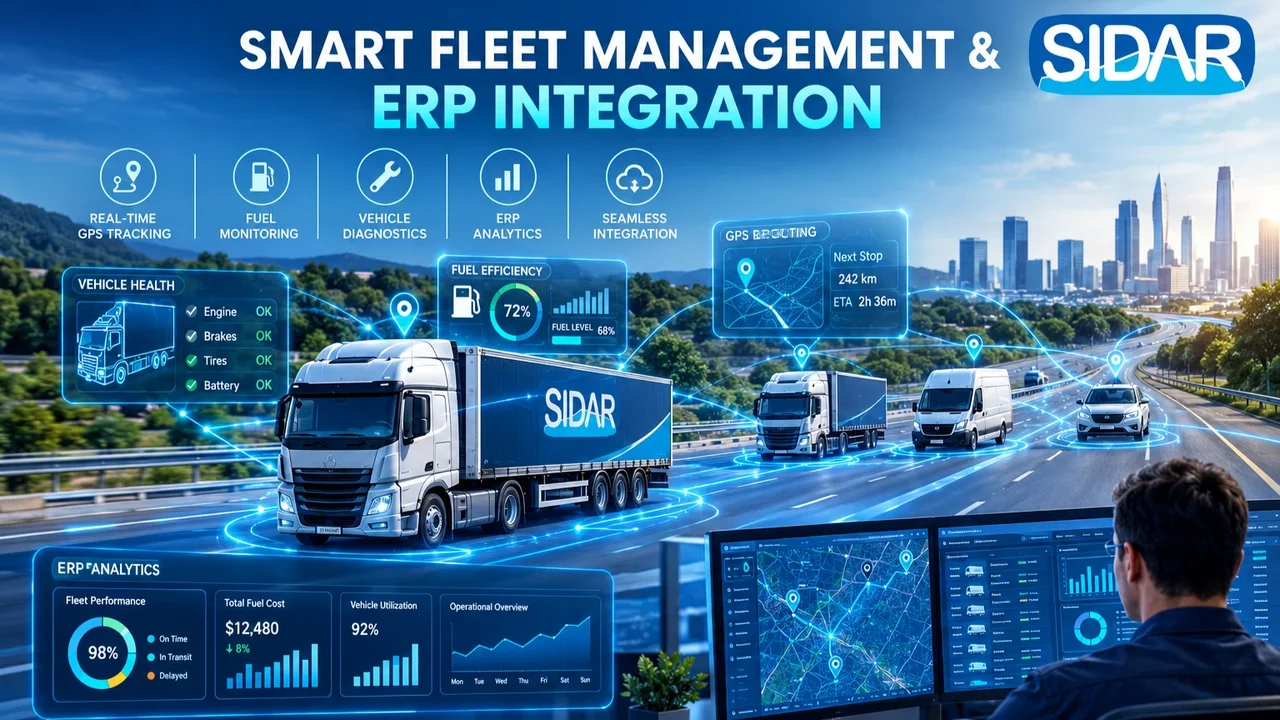
The Shift from Standalone Tracking to Integrated Enterprise Systems
Traditional Fleet Management Systems (FMS) excel at providing operational visibility, such as real-time GPS locations, route histories, and basic driver activity. However, when these systems operate as isolated data silos, organizations face significant administrative friction:
- Manual Data Re-entry: Operational mileage, logbooks, and trip reports must be manually transferred to accounting and payroll teams.
- Delayed Maintenance Visibility: Service requirements identified on the road often reach the workshop or procurement department only after a mechanical breakdown occurs.
- Fragmented Cost Analysis: Fuel bills, toll receipts, driver wages, and spare parts expenses are tracked across different software, making accurate per-trip or per-vehicle profitability analysis difficult.
By connecting vehicle tracking and fleet telemetry with an automotive and operational ERP like SidarSoft ERP, businesses can bridge the gap between field operations and core back-office workflows.
Key Operational Areas Connected by ERP Integration
1. Gate Control, Trip Dispatch, and Security Workflows
An ERP-driven transport workflow starts at the facility gate. By linking traffic permissions, driver assignments, and vehicle pass authorizations with security and yard management modules, companies ensure that only authorized personnel and compliant vehicles leave the premises. All entry and exit timestamps are automatically recorded against active operational orders.
2. Preventive Maintenance and Spare Parts Inventory
Vehicle reliability depends on structured servicing. When vehicle usage data and inspection reports feed directly into the ERP:
- Service intervals can be planned proactively according to operational milestones and inspection findings.
- Maintenance teams can immediately check warehouse inventory for required spare parts, filters, or lubricants.
- Internal repair orders or procurement requisitions are created without delays, reducing unplanned vehicle downtime.
3. Cost Allocation and Financial Transparency
Every journey generates multiple expense lines. Integrated systems allow companies to assign fuel costs, consumable parts, toll fees, and labor expenses directly to specific cost centers, projects, or client contracts. This financial consolidation provides management with accurate cost per kilometer and overall fleet total cost of ownership (TCO).
4. Test Drives, Demonstrations, and Commercial Fleet Operations
For automotive dealerships, distributors, and logistics providers, managing test-drive units and transit car carriers requires rigorous oversight. Integrating vehicle status, handover protocols, and customer feedback into the ERP ensures compliance, vehicle safety, and comprehensive audit trails.
Comparison: Standalone FMS vs. ERP-Integrated Fleet Operations
| Operational Feature | Standalone Fleet Software | Integrated ERP Solution |
|---|---|---|
| Data Focus | GPS coordinates, vehicle location, speed alerts | Holistic business processes: maintenance, inventory, finance & operations |
| Maintenance Management | Basic odometer-based alerts without inventory links | Integrated work orders, part reservations, and technician scheduling |
| Expense Accounting | Separate fuel logging and receipt collection | Direct cost-center allocation, invoice matching, and financial ledger posting |
| Access & Security | Isolated driver and unit lists | Integrated gate passes, personnel permissions, and transit authorization |
| Reporting & Analytics | Route and driving behavior reports | Comprehensive profitability, asset lifecycle valuation, and operational KPI dashboards |
Roadmap for Implementing Integrated Fleet Management
- Process Assessment: Map existing vehicle workflows, from driver dispatch and fuel recording to workshop maintenance and accounting entries.
- Data Architecture Planning: Define key data parameters (e.g., vehicle master data, driver IDs, maintenance schedules, cost centers) required across departments.
- System Configuration & Alignment: Configure the ERP modules—including inventory, gate pass control, after-sales/maintenance, and finance—to reflect operational requirements.
- Pilot Testing & Rollout: Conduct controlled testing on a subset of the fleet to validate data consistency, driver compliance, and reporting accuracy before full-scale deployment.
- Continuous Monitoring & Optimization: Use integrated business intelligence reports to identify operational bottlenecks, optimize resource allocation, and preserve asset longevity.
Conclusion
Modern fleet operations require synchronized management across logistics, technical servicing, and corporate accounting. Unifying vehicle data within an enterprise management architecture like SidarSoft ERP empowers decision-makers with actionable operational intelligence, tighter cost controls, and enhanced operational reliability.