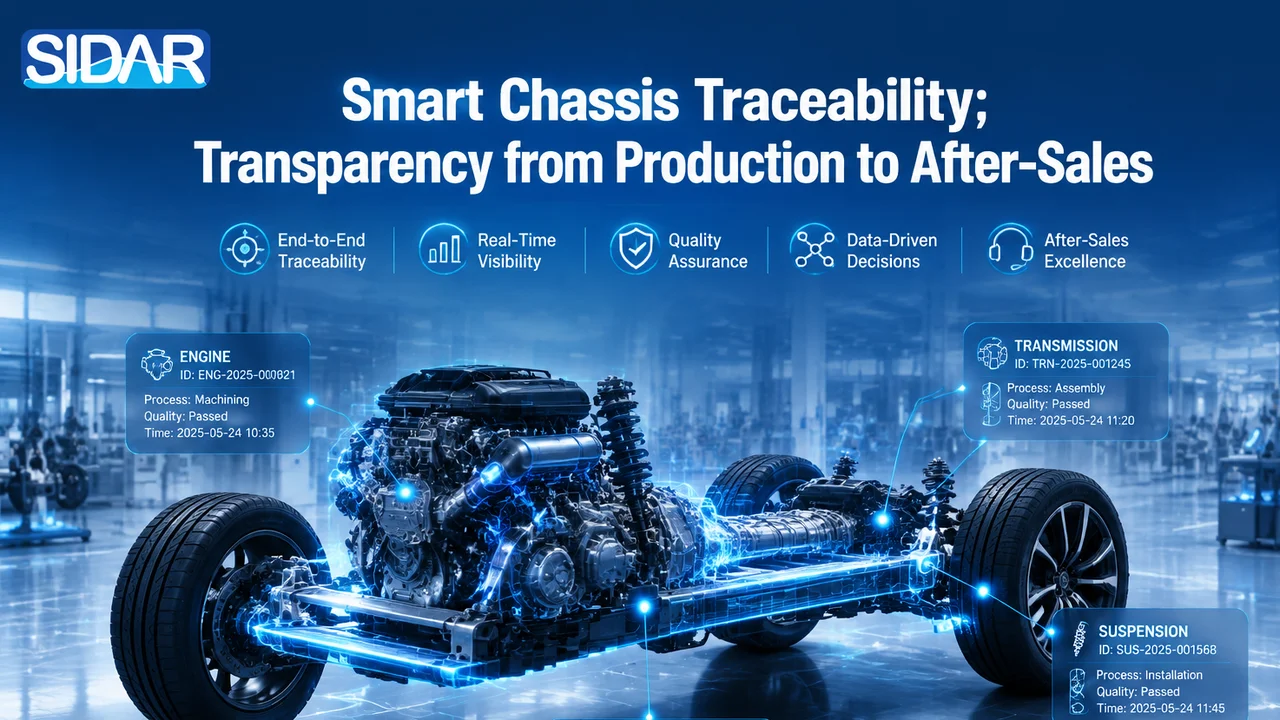
VIN and Parts Traceability in Automotive Software: From Production to After-Sales
In the complex automotive industry, a single small component can change the fate of a vehicle or even an entire brand. Traceability is no longer just an option; it is a vital necessity for quality management, reducing warranty costs, and complying with international standards like IATF 16949. But how can this chain of communication be maintained from the moment a part is produced until years later during vehicle service?
1. Traceability in Production: The Vehicle’s Digital Birth Certificate
Everything begins with the VIN (Vehicle Identification Number). In an advanced automotive ERP system, every vehicle has a "Digital ID" that includes:
- As-Built Configuration: Accurate recording of serial numbers for critical components (such as engines, transmissions, and brakes) installed in that specific vehicle.
- Lot/Batch Tracking: Knowing which production batch a part belongs to and which supplier provided the raw materials.
- Production Condition Logs: Recording production time, assembly line data, and even the technician responsible during assembly.
2. The Bridge: From Warehouse to Supply Chain
When parts leave the production line, traceability must continue in the warehouse. Automotive software must link the Part Serial Number to its Storage Location. This is crucial for managing Reverse Logistics and returning defective parts to the supplier efficiently.
3. Managing After-Sales and Warranty
The biggest challenge for automakers and dealerships is managing warranty claims. Without precise VIN-based tracking, several issues arise:
❌ Part Mismatch: A technician might install a part that does not match the technical specifications of that specific vehicle model.
❌ Warranty Disputes: Inability to prove whether a part failure was a manufacturing defect or caused by customer misuse.
❌ Recall Inaccuracy: Failure to precisely identify affected vehicles when a defect is found in a specific batch of parts.
4. The Role of ERP in Traceability Integration
A comprehensive ERP system like Sidar Soft manages this entire chain seamlessly:
- Connecting Production Data to Service: Production data is directly available to the after-sales unit, providing a full history of the vehicle upon arrival at the service center.
- Automated Warranty Claims: Using the VIN, the system automatically checks part coverage and warranty validity periods.
- Failure Data Analysis: Managers can identify if failures are linked to a specific series of parts produced on a certain date.
Conclusion
Accurate VIN and parts traceability is more than just data entry; it is a tool for risk mitigation, increasing customer satisfaction, and smart cost management. With modern software solutions, automotive companies can maintain full control over quality and processes from production to after-sales.