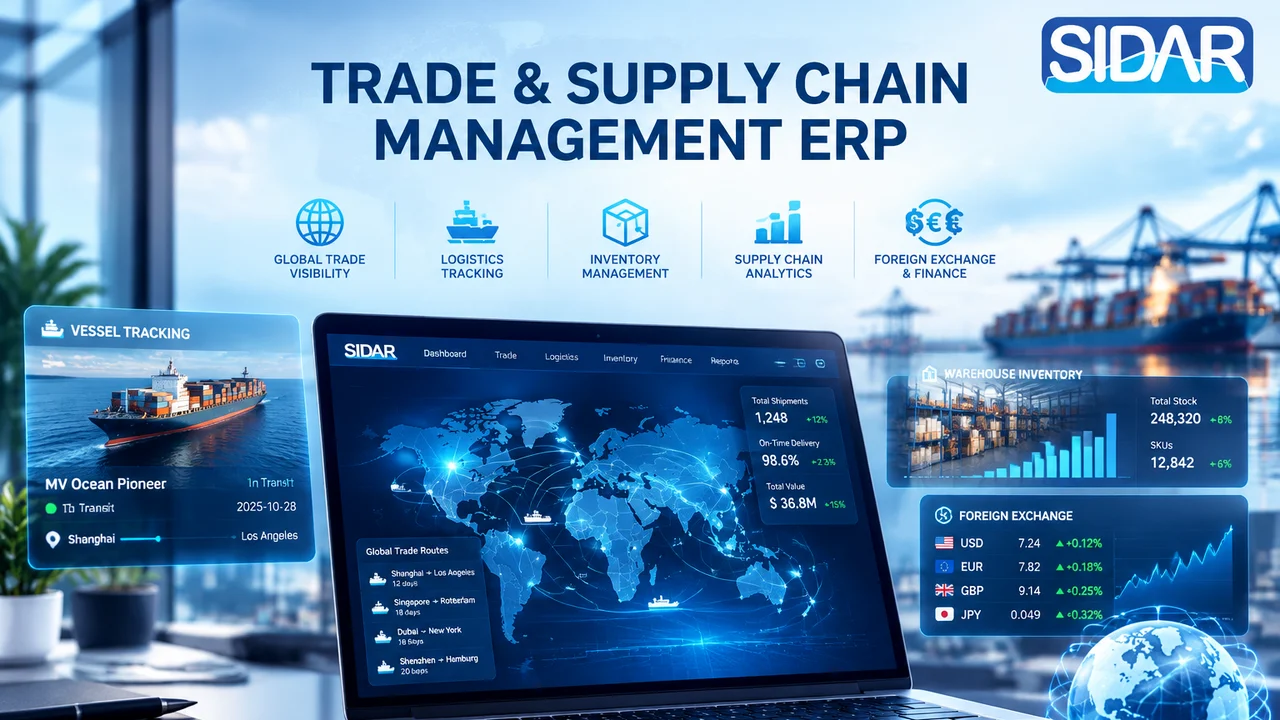
Comprehensive Guide to Internal, Foreign Trade, and Supply Chain Management with Sidar ERP Software
In today's volatile economic landscape, the stability of any commercial organization hinges on the agility and precision of its trade decisions. Siloed departments, a lack of coordination between procurement, warehouse, and finance, and complex import/raw material sourcing challenges are significant growth obstacles. Sidar ERP's integrated platform unifies all internal, foreign trade, and Supply Chain Management (SCM) processes, empowering organizations to navigate their growth path with confidence.
1. Domestic Trade: From Purchase Requisition to Financial Settlement
Domestic trade is the vital artery for an organization's operational needs. Sidar's Domestic Trade module automates this cycle, offering:
- Intelligent Workflow: Enables purchase requisitions from all departments with multi-level management approval.
- Supplier Database: Evaluates and categorizes domestic suppliers based on quality, delivery reliability, and past performance.
- Real-time Integration: Automates goods receipt, purchase accounting, and supplier liability without manual errors.
2. Foreign Trade & Imports: Mastering Currency and Customs Complexities
Importing goods and raw materials is fraught with risks due to customs regulations, currency fluctuations, and associated costs. Sidar's Foreign Trade system provides specialized tools:
- Comprehensive Import File Management: Tracks and manages documents like Proforma Invoice, Purchase Order, Bill of Lading, Packing List, and customs declarations.
- Intelligent Landed Cost Calculation: Automatically allocates overhead costs (customs duties, insurance, freight, banking fees) to the cost of each imported item.
- Multi-Currency Management: Records transactions in various currencies and accurately calculates FX gains or losses upon settlement.
3. Smart Supply Chain Management (SCM)
Modern SCM goes beyond mere purchasing; it optimizes the flow of goods from the source to the end customer. Sidar's SCM is designed proactively:
- Demand Forecasting & Planning: Analyzes historical sales data and market trends to suggest optimal procurement timing and quantities.
- Inventory Optimization: Prevents capital lock-up by defining reorder points and minimum stock levels to maintain balance.
- Production Integration (BOM): Directly links SCM with the Bill of Materials (BOM) to prevent production halts due to part shortages.
4. Strategic Advantages of Implementing Sidar ERP
Adopting Sidar's integrated solution for trade and procurement yields tangible benefits:
- Maximum Data Transparency: Access real-time management dashboards for procurement status, liabilities, and import progress.
- Elimination of Human Error: Automates document entries and ensures seamless communication between trade, warehouse, and finance departments.
- Agility in Decision-Making: Provides advanced analytical reports for selecting optimal suppliers and streamlining logistics costs.